

How to Design Eye-Catching Visuals for Media Facades?
- admin
- Media Facade
- 0 Comments
Gone are the days when buildings in the modern urban cityscape were nothing more than static buildings—now, they have evolved into dynamic canvases for storytelling, building brand identities, and art. Among the most advanced developments in this transition are media facades on buildings, which employ LED screens, projection technology, and light architecture to convey messages in real time.
However, creating captivating content for these architectural displays requires more than just uploading a video or graphic. It’s about designing visuals that can command attention, evoke emotion, and complement the structure they’re projected on. In this blog, we’ll dive into how to create eye-catching visuals for media facades—from understanding technical limitations to embracing creativity with purpose.
1. Understand the Medium and Its Unique Challenges
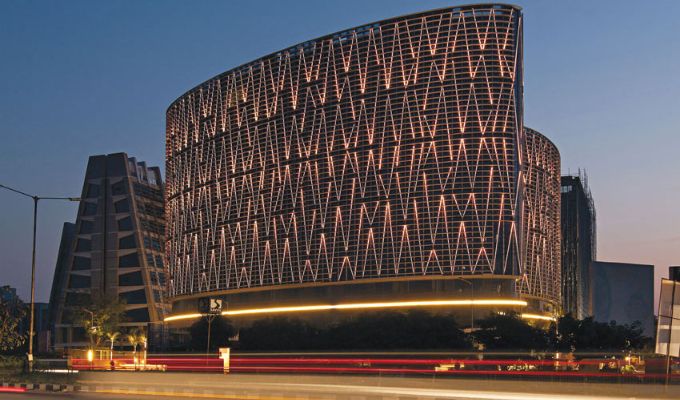
Designing for a media facade is far removed from designing for conventional screens or billboards. The material typically comprises LED grids, mesh screens, or even window-integrated displays inclined to flow around intricate building geometries.
Key considerations:
- Resolution limitations: Media facades are prone to operate at much lower pixel density than phones or TVs. Think of it as designing for a jumbotron rather than an HD display.
- Viewing distance: The material will usually be viewed reasonably far away, so small text or minute details are absent.
- Ambient lighting: Consider the daylight and nighttime lighting. Your graphics need to be light enough to remain visible even in the daylight sunlight or poor evening lighting.
2. Begin with a Strong Visual Concept
Before jumping into software or tools, start with a good visual idea. Think about the message, mood, or story you want to convey. Your content needs an overt narrative or emotional purpose for branding, advertising, art, or public signage.
Good concept tips:
- Visuals must be put by the purpose of the facade—art installation facades can be abstract and pliable, while commercial facade facades must focus on brand identity.
- Use narrative to guide viewer engagement—think motion, rhythm, and flow.
- Remember: “What sensation or reaction do I want to elicit from passersby?”
3. Design for Scale and Motion
Designing at this level of scale involves your imagery working cohesively on potentially hundreds of meters of surface area. Simple tends to be a winner in this context.
Best practices are:
- Use intense, high-contrast colors: These read more clearly across LED facades and remain readable.
- Minimize Text: Use large, readable fonts where appropriate, and keep your words short and powerful.
- Animate with a purpose: Movement is attention-grabbing, but don’t overdo tricky transitions. Slow, smooth visual sequences work better than high-speed, stuttering ones on large media facades.
4. Sync with the Architecture
Media facades are part of the building, not overlays. Great graphics complement the architecture, not battle it.
Architectural harmony tips:
- Plan your graphics onto the building’s shape—experiment with how graphics will curve around corners or follow the edge of curves with 3D mockups.
- Consider transparency and layering—facades sometimes include mesh or clear LED panels, so lighting from inside or room activity can influence the overall impact.
- Highlight architectural detail with light, shadow, or specific animations that follow the facade’s shape.
5. Don’t Forget the Looping Experience
Unlike traditional media, façade media content loops. The user experience must be unbroken whether the user coincidentally looks for five seconds or watches for sixty seconds.
Loop design tactics:
- Design seamless loops in which the terminus seamlessly flows back into the origin.
- Replace jarring or “hard cuts” with smoother cuts that can upset the viewing experience.
- Provide different content during morning rush, daytime business hours, and evening pedestrian flows.
6. Energy and Performance Optimization
Managing a media façade is not just about aesthetics—part of it is efficiency. Properly designed content can be energy-saving and prolong hardware life.
Green practices:
- Use darker colors where possible; bright whites consume more energy.
- Minimize full-screen transitions that require maximum brightness from all LEDs.
- Schedule dimmer content during late night or off-peak hours.
7. Collaborate with Technicians and Architects
An award-winning media façade picture is rarely the result of one person. Coordination ensures that your design will be technically feasible and within safety, architectural, and city regulations.
Coordination checklist:
- Coordinate with lighting designers, facade engineers, and AV technicians.
- Find out about hardware specifications, such as screen resolution, brightness level, color gamut, etc.
- Simulate your content in a test environment before full implementation.
8. Use the Right Tools
To make your graphics come to life, employ tools geared towards motion graphics and big visualization.
Some of the top tools are:
- Adobe After Effects: Great for motion graphics and animation.
- Resolume Arena: Ideal for real-time video mixing and projection mapping.
- TouchDesigner: A good tool for interactive and generative design.
- MadMapper: Excellent for real-time graphics and projection mapping.
These software packages enable you to design how the face will look on the building so that you can preview, modify, and perfect it before installation.
9. with Interactivity and Real-Time Information
Modern building media facades do not need to be pre-programmed loops. Interactive and real-time content makes for a more engaging experience.
Interactive design concepts:
- Connect the visuals to live information—weather, news, or social media streams.
- Use motion sensors to react to crowd movement or traffic patterns.
- Offer smartphone control or interaction using QR codes or AR applications.
Conclusion
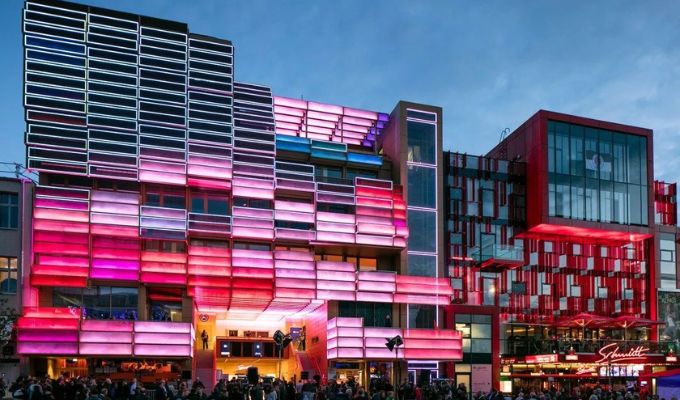
Designing eye-catching visuals for media facades is where technology and architecture meet art. It’s turning buildings into living, breathing communication platforms that echo art, culture, and innovation. By recognizing the technical challenges, welcoming the scale, and designing with purpose, you can turn even the most ordinary building into a visual landmark.
Whether you’re an artist, designer, architect, or brand manager, mastering the art of visuals for media facades on buildings offers a unique opportunity to influence how cities look and feel—one pixel at a time.
Recent Comments